
Keeping Russian olive trees out of our parks
The City of Lethbridge's Parks team is ramping up efforts to remove Russian olive trees.
Russian olive is an invasive species that spreads throughout our parks and river valley. It thrives in climates with hot, dry summers and cold winters – like Lethbridge. Once established, it’s difficult and expensive to get rid of.
To identify it, look for a thorny bush or small tree up to nine metres tall. It has thin dark brown bark, silver-toned stems, lance-shaped leaves and fragrant yellow flowers that produce silver berries. Russian olive is commonly found in areas with high water runoff, such as coulee channels, storm ponds and riverbanks along the Oldman River.
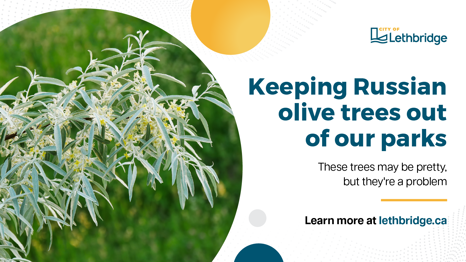
Although it’s pretty, it’s a big problem. Like many invasive species, Russian olive:
- Grows aggressively and crowds out native species
- Outcompetes native species for water and soil, reducing biodiversity
- Alters soil chemistry, making it harder for native species to grow
- Reduces wildlife access, habitat and food sources
- Is highly combustible and increases the risk of intense wildfires
Mitigation is a year-round effort by the City's Parks department. Crews remove trees, monitor regrowth and restore native species to previously infested areas. This year alone, 147 Russian olive trees were removed from Firelight Park in Copperwood.
The public plays an important role in preventing the spread of invasive species:
- Don’t plant Russian olive on private property
- Remove young Russian olives from your yard before they fully establish
- Plant native or non-invasive species, such as cottonwood or willow
- Call 311 to report large stands of Russian olive in natural areas
Use the Lethbridge Tree Guide for help choosing the right tree for your location.
For Public Inquiries:
Call or chat with 311 I Monday to Friday, 8 a.m. to 4:30 p.m.
Contact Us
City Hall
910 4 Avenue South
Lethbridge, AB T1J 0P6
Phone: 311
or 403-320-3111 (if outside of Lethbridge)